Roof Care

Author name: ztl.nikhil

HDPE Liners

Why HDPE Liners are Essential for Large-Scale Construction

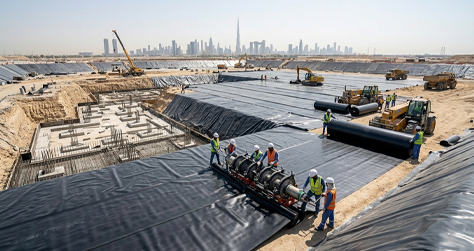
In large-scale construction, particularly for foundations and containment structures, HDPE (High-Density Polyethylene) liners are essential due to their extreme durability and impermeable nature. These liners provide a critical barrier against water, aggressive chemicals, and environmental contaminants that can compromise structural integrity over time. Because large projects often involve complex ground conditions, the high tensile strength and puncture resistance of HDPE ensure that the building remains protected even under significant physical stress. Beyond basic protection, the use of HDPE liners allows for a high degree of customization to meet the specific environmental demands of a site, such as high soil salinity or fluctuating groundwater levels. Their resistance to UV radiation and chemical degradation makes them a superior long-term solution compared to traditional clay or low-grade plastic barriers. By creating a seamless, impermeable shield, HDPE liners ensure that large-scale developments stay safe, strong, and weather-ready, significantly reducing future maintenance costs and environmental risks.
Waterproofing

The Importance of UV-Resistant Waterproofing in the UAE

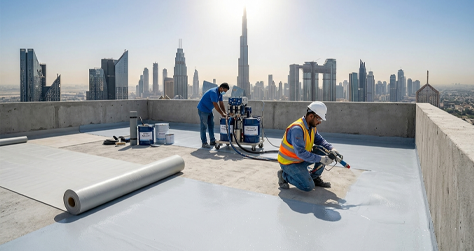
The intense Middle Eastern sun serves as a constant threat to structural integrity, often causing traditional materials to fail and making specialized UV-resistant solutions a necessity for long-term protection. In the UAE, roofs must endure extreme thermal shock as temperatures soar to over 50°C during the day before cooling rapidly at night, a cycle that causes standard membranes to expand, contract, and eventually crack. Without high-grade UV protection, the chemical bonds in bitumen or low-grade plastics break down, leaving the surface brittle and prone to shattering under stress. To combat these harsh conditions, a professional customization of materials is required to ensure a property remains truly weather-ready. Systems such as Polyurea or GRP Lining provide a seamless, UV-stable finish that eliminates the joints where peeling and leaks typically begin. Beyond structural safety, these advanced reflective coatings act as a “cool roof,” significantly lowering surface temperatures and reducing the energy load on HVAC systems, which helps keep homes safe and strong while lowering cooling costs.

Bitumen, GRP Lining

GRP Lining vs. Bitumen: Which is Right for Your Property?

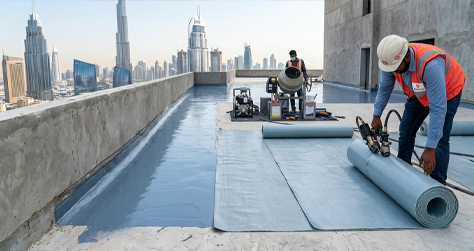
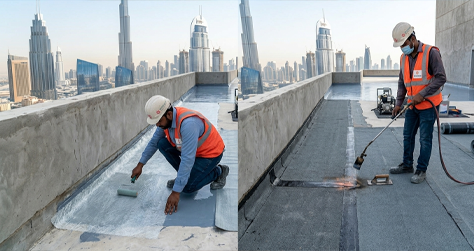
When protecting your property from water damage, choosing between GRP (Glass Reinforced Plastic) Lining and a Bitumen Membrane Waterproofing System is a critical decision. Bitumen remains a popular, cost-effective choice known for its durability and flexibility on various roof types. However, GRP Lining offers a modern, seamless alternative that provides exceptional protection against corrosion and harsh environmental conditions, making it an excellent customization for roofs that require a high level of chemical and impact resistance. While Bitumen is reliable for standard waterproofing, GRP’s seamless application eliminates the joints where leaks often begin, ensuring long-lasting safety for your structure. For properties in demanding environments, GRP’s superior strength often outweighs the initial cost, providing a “weather-ready” barrier that remains strong and safe all year round. Ultimately, the right choice depends on your specific structural needs and long-term protection goals.

Blog

5 Warning Signs Your Roof Isn’t Ready for the Rainy Season

In regions with extreme climates like the UAE, months of intense heat and UV exposure can silently degrade even the strongest roofing materials. This prolonged thermal stress often leads to “thermal shock,” causing cracks, blisters, or brittle sealants that are easily overlooked during the dry season. When sudden, heavy rains finally arrive, these minor imperfections act as gateways for water, turning small gaps into major structural leaks. Identifying issues like clogged drainage outlets or visible surface wear now is essential to prevent the weight of ponding water from compromising your building’s safety. Proactive maintenance is the most effective way to avoid the high costs and stress of emergency repairs during a storm. If you notice interior dampness, yellowing ceiling stains, or peeling protective coatings, your current waterproofing system has likely already been breached. By opting for a professional inspection, you can implement a specific customization of your roof’s protection—whether through GRP lining, EPDM membranes, or liquid waterproofing—to ensure your property remains completely weather-ready and secure all year round.

Scroll to Top