
- Services
- Liquid Waterproofing
Liquid Waterproofing
Liquid waterproofing is the process of applying a liquid-applied coating to surfaces such as concrete, metal, wood, and masonry to create a seamless and water-resistant barrier. Once cured, the coating forms a fully bonded, flexible, rubber-like elastomeric membrane that can accommodate minor movements and cracks without damage, ensuring long-term durability and protection.
These systems can be single or multi-component and are often reinforced with materials like glass-reinforced fibres to improve tensile strength and performance. Liquid waterproofing products are typically high-performance and tested to meet industry standards, offering reliable resistance against water ingress, chemicals, and environmental exposure.
One of the key advantages of liquid waterproofing is its ease of application, especially on complex shapes and details, as it creates a joint-free membrane that significantly reduces the risk of leakage compared to traditional sheet systems. Additionally, it is a cold-applied process, eliminating the need for hot works and thereby reducing fire risks while ensuring safer installation.
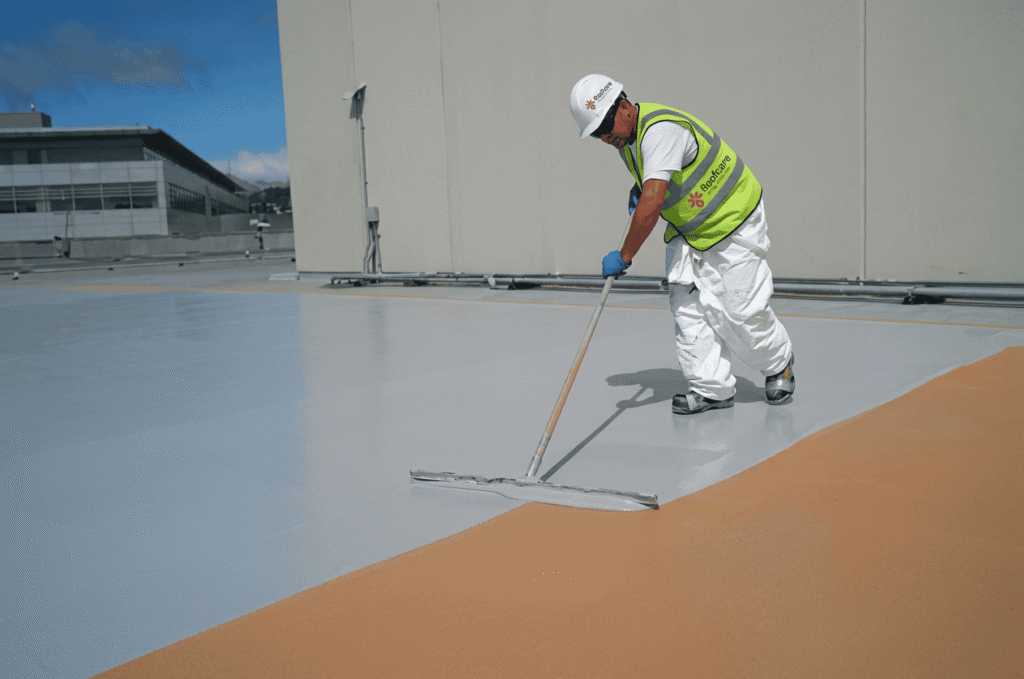
Application Procedure
Thoroughly inspect substrate condition and environmental factors including wind speed, humidity levels, and surface moisture content, ensuring all parameters comply strictly with manufacturer’s specifications before proceeding.
Precisely spray-apply the polyurethane foam in multiple passes to achieve the required thickness, creating a seamless, self-bonding insulation layer across the entire deck.
Apply a UV-resistant protective base coat over the cured foam to seal the surface and provide an immediate waterproof secondary shield.
Install a separation layer of non-woven geotextile followed by the formation of precise slopes using lightweight screed to ensure efficient water drainage.
Lay the protective concrete screed to specified gradients, providing a durable walking surface and mechanical protection for the underlying layers.
Detail all critical areas, including expansion joints and wall-to-floor junctions, with specialized sealants and cementitious coving to eliminate leak-prone corners
Apply the final, heavy-duty waterproof membrane over the finished screed and parapets for a complete, multi-layered customization of the roof’s defense system.